Anse Noire
Black sand, a hundred metres from a white beach
Town : Les Anses d'Arlet
Anse Noire owes its name to its sand, which is black. It is separated from Anse Dufour, whose sand is pale, by a single rocky point: two neighbouring bays, two opposite bottom colours.
Why two neighbouring beaches differ
Pale sand comes from ground-up coral and shells, of biological origin. Black sand comes from eroded volcanic rock, of mineral origin. Martinique being a volcanic island fringed with reefs, it produces both.
What settles a beach’s colour is what the currents and rivers deposit there. Two bays separated by a point can therefore receive two different materials, and that is exactly what happens here.
What a dark bottom changes underwater
A black bottom absorbs light instead of returning it. The dive looks darker at equal depth, but the colours of fish and sponges stand out far more, with no pale bottom to compete with them.
It is a site where a torch changes everything, and where photographers find contrasts they will never get over white sand.
Turtles
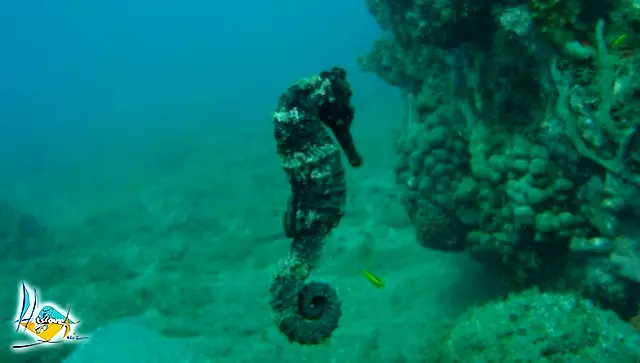
Like its neighbour, Anse Noire is a turtle refuge, and its bottom is populated with multicoloured fish.
What level you need here
| Your level | What you can do here |
|---|---|
| Try dive | Yes, the bay is sheltered |
| Level 1 and above | The site |